Helping your baby after tongue-tie division
Following tongue-tie division you can help your baby’s recovery in the following ways.
If baby is irritable following the procedure lots of cuddles and skin contact can help comfort your baby and encourage normal feeding behaviour
If your baby is over 8 weeks old paediatric paracetamol can be given to reduce any pain. Always follow the instructions for use and seek medical advice if symptoms continue
There should be no further bleeding after leaving the consultation, although occasionally some parents have said that a large yawn or strenuous cry can cause very small spots of blood to appear. If this occurs putting baby to the breast or bottle for a feed can quickly stop any bleeding
After about 24 – 48 hours you may notice a small whitish patch under your baby’s tongue; this is a normal part of the healing process and usually lasts for about 7 – 10 days
Exercises to enjoy with your baby when they are awake, alert and engaged with you.
Always wash your hands and have short nails, and stop if you see any signs of tiredness or hunger.
Copy me!
When baby is relaxed and engaged poke your tongue out and encourage them to do the same. Wait, smile and repeat several times. This can be done 3 – 4 times a day to help tongue extension
Follow me!
When baby is relaxed ask if they would like to play. When their mouth is open put your clean finger on the lower gum and move it gently to the side – your baby’s tongue tip should follow your finger. Slide your finger along the gum to the other side, and your baby’s tongue should again follow. Do this several times each side 3 – 4 times a day to increase sideways tongue movement; smile and chat at the same time.
Sucking Exercise
Place a clean finger against your baby’s lips (fingernail to upper lip) and when baby’s mouth opens allow your finger to be drawn in, fingernail resting on the tongue. (Do not try to put your finger in baby’s mouth without their ‘permission’). As baby starts sucking gently press down and pull your finger forward so that the tongue moves forward over the lower gum. Engage in a gentle ‘tug of war’ with your finger stroking forward nail down but never leaving baby’s mouth.
This can be especially useful to help babies with a weak or disorganised suck just before putting to the breast or bottle feeding, and can be done for a minute or so before each feed.
De-sensitising a gag reflex
Some babies with tongue-tie or a high palate also have an overactive gag reflex and may try to avoid gagging whilst feeding by repositioning themselves to a shallow latch.
As with the sucking exercise allow your finger to be drawn into baby’s mouth; this time touch just behind baby’s upper gum line with the pad of your finger and apply pressure as you move your finger very slowly back along the hard palate. Stop before baby starts gagging – gradually the gag reflex should move back enabling baby to tolerate a deeper latch. Try this 3 – 4 times a day when your baby is awake, calm and happy for you to do this.
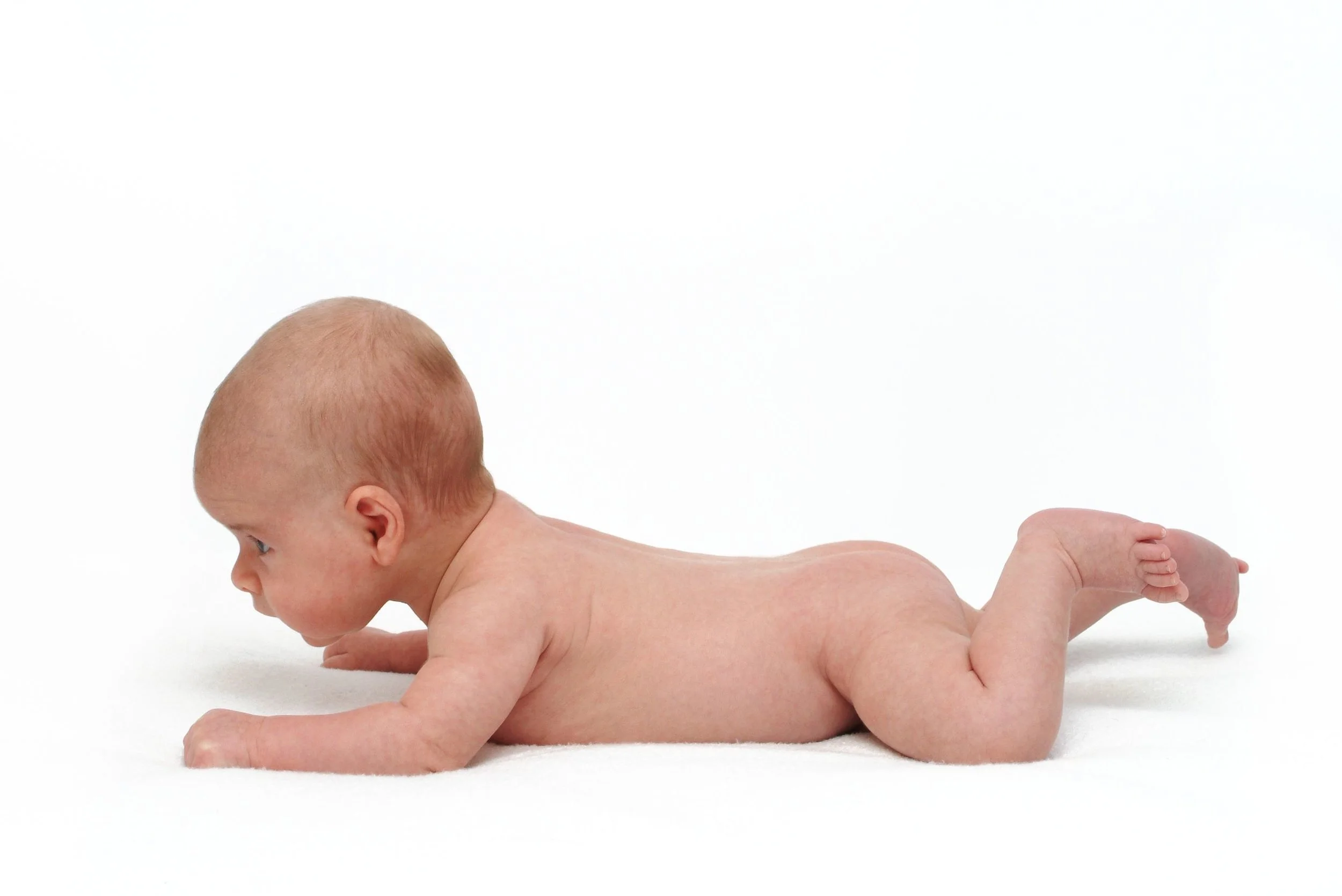
Tummy time
Tummy time is a really important activity for all babies, but it may be even more beneficial to babies with tongue-tie, strengthening the muscles in the neck, head and shoulders and potentially increasing mobility of the tongue.
Tummy time should only be done when baby is awake, alert and supervised by you. No special equipment is needed, just a clean blanket or large towel laid on the floor. You can start in the first week if your baby was born at term and has no health concerns; try a couple of times a day for a few minutes and build up the time baby spends on their tummy, ending the activity before baby falls asleep or becomes distressed.
Lay baby gently on their tummy with their arms to the side, hands facing forward. Lie in front or next to your baby and chat or sing whilst looking at each other, then swap sides so that baby sees you from both sides. If baby appears to be uncomfortable on a flat surface place them tummy down on your chest as you recline supported in a chair, with their head close to yours so that you have eye contact. Over the course of a few sessions lie flatter so that baby gets used to being flat on their tummy, then try them on the floor.
Benefits of tummy time
Good preparation for rolling, sitting and crawling
Uses muscles not used when lying on their back or sitting in a baby chair or car seat
Enhances motor skills (coordination and movement of the arms, legs, head and body)
Gives baby a different view of the world
May help to relieve wind or colic
May reduce the risk of an uneven shaped head
Osteopathy
Many parents find that manual therapy practitioners such as osteopaths can use gentle non-invasive techniques with their babies to positively influence musculo-skeletal restrictions that may affect feeding and tongue mobility.
For more information please see the statement about manual therapy on the Association of Tongue-tie Practitioners website:
https://www.tonguetie.org.uk/manual-therapy-and-infant-feeding/